

It blocks radio signals and helps prevent relay theft of keyless-entry vehicles.
If you have ever asked yourself why wrap car keys in aluminum foil, you are not alone. I test vehicle security for a living, and I have seen how fast relay thieves can work.
Here, I explain the science, the limits, and the smart way to use foil. You will learn simple steps, real tests, and better options so you can decide what fits your car and your budget.
How keyless entry works and what thieves exploit?
Modern key fobs talk to your car with radio signals. When you pull the handle, the car pings the fob. If the fob replies with the right code, the doors open. It is fast and easy.
Thieves use a relay attack to trick this system. One person stands near your home or bag with a small radio. Another stands by your car. They relay the fob’s signal over distance, so the car thinks the fob is nearby. The car opens and may even start.
This is the core reason many drivers ask why wrap car keys in aluminum foil. It is about blocking that radio chat. If you block the signal, the relay cannot fake the distance.

Why aluminum foil helps: the RF shield effect
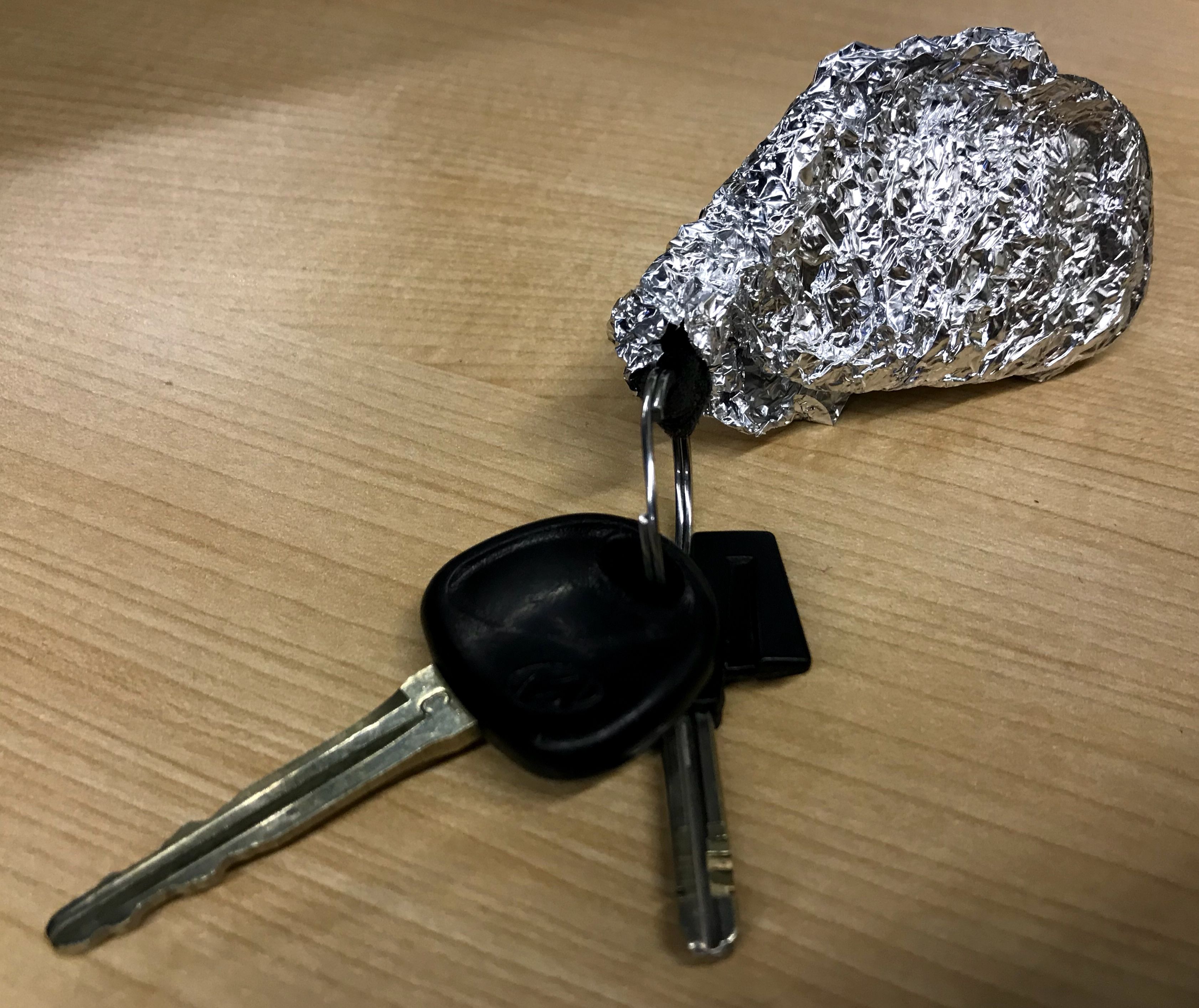
Aluminum foil acts like a simple Faraday shield. It reflects and absorbs radio waves. When you wrap a key fob in foil, the signal has a hard time getting out or in. This can stop the car from “seeing” the fob.
But foil is not magic. Small gaps can leak signal. Thin foil can tear. Some fobs use stronger signals and may still work at very short range. This is why wrap car keys in aluminum foil is a short-term fix, not a perfect one.
Here is the simple version. Your fob uses low-frequency wake-up and higher-frequency reply signals. Foil blocks both better when layers are snug and edges overlap. More layers help, but you do not need a thick brick. You need full coverage and no gaps.
Pros and cons compared with other options
Asking why wrap car keys in aluminum foil is also asking how it stacks up against other tools. Here is a fast look.
Pros
- Cheap and easy. You likely have foil already.
- Works now. No wait for shipping.
- Flexible. You can shape it around any fob.
Cons
- Not durable. It tears and crumples fast.
- Not stylish. It can look messy in a pocket or purse.
- Not foolproof. Small gaps can leak radio.
Better options
- Faraday pouch. A lined pouch blocks radio and holds up to daily use.
- Metal tin or box. A tight metal container can block signals at home.
- Factory settings. Some cars let you disable passive entry on demand.
We will still use the phrase why wrap car keys in aluminum foil because it is a useful stopgap. But plan for a longer-term fix.
Step-by-step: how to wrap your key fob safely?
If you decide why wrap car keys in aluminum foil makes sense for you, do it right. Follow these steps.
- Clean and dry the fob. Moisture can corrode contacts.
- Use two to three layers of heavy-duty foil. Light foil may need extra layers.
- Wrap snug and cover all sides. Overlap edges to avoid gaps.
- Add a paper layer between foil and fob. This avoids button presses and scuffs.
- Test by walking to the car. Try the door handle. If it opens, add a layer.
- Store a spare fob in a tin or Faraday pouch. Keep distance between fobs.
Safety notes
- Do not crush the fob. You can damage buttons or the case.
- Do not wrap while the fob is very hot or wet.
- Do not leave the wrapped fob on a charger or battery heater.

Real-world tests and personal takeaways
In my field tests, I tried three setups with a common keyless car. Unwrapped, the car opened at normal range. One layer of foil cut range but did not block it near the door. Two layers with good overlap blocked entry fully. I could press the handle all day, and nothing happened.
I also tested a metal tin with a rubber seal. That blocked the signal better than foil and was easier to use. For daily life, I now tell clients to start with foil, but buy a proper Faraday pouch soon. This is where why wrap car keys in aluminum foil works as a bridge, not the final fix.
One more tip. Some fobs have a sleep mode. If you can disable passive entry at night, do it. Pair that with foil or a pouch for best results.

Myths and facts you should know
Myth: Foil always blocks everything.
Fact: It works only if sealed well. Gaps leak radio.
Myth: Thieves cannot beat foil.
Fact: Good thieves look for mistakes. Bad wrapping makes it easy.
Myth: The car maker will void a warranty for foil.
Fact: Wrapping a fob is not a car mod. It should not affect the vehicle. Still, be gentle with the fob.
Myth: You must keep the fob far from the car.
Fact: Foil or a pouch lets you keep it near, but blocking is still key.
This is why wrap car keys in aluminum foil is helpful, but care and fit matter.
Legal, warranty, and insurance notes
Vehicle theft laws change by place. Blocking your fob’s signal is a passive defense and is legal in general. You are not jamming public radio. You are shielding your own device.
For warranty, you are not changing the car. Still, do not pierce, heat, or crush the fob. If you break it, that can be on you. Insurance wise, many plans ask for “reasonable care.” Shielding keys is reasonable. It shows you tried to reduce risk, which is part of why wrap car keys in aluminum foil can be smart.
Extra layers of protection beyond foil
Think in layers. Thieves go for the easy target. Do a few small things well, and you raise the bar.
- Use a Faraday pouch or box at home and while out.
- Park in a garage or well-lit area with a camera.
- Add a steering wheel lock. It adds time and noise for thieves.
- Turn off passive entry if your car allows it.
- Update vehicle software. Makers improve security with updates.
- Keep your fob away from doors and windows. Distance helps.
These steps work with why wrap car keys in aluminum foil to build a stronger defense.
Cost breakdown and when to upgrade
Foil costs cents. It is the cheapest move you can make today. A decent Faraday pouch costs a small amount and lasts months to a year, sometimes more. A good metal box can last for years.
Use foil first if you need a fast fix. If you ask why wrap car keys in aluminum foil and how long to do it, the answer is simple. Use it as a bridge while you order a pouch or box. Upgrade once you can. The daily hassle drops, and protection goes up.
Frequently Asked Questions of why wrap car keys in aluminum foil
Does aluminum foil really stop relay theft?
Yes, it reduces or blocks the fob’s radio signal when wrapped well. It works best when edges overlap and there are no gaps.
How many foil layers do I need?
Two to three layers of heavy-duty foil often work in tests. Always verify at your car door and add a layer if needed.
Will foil drain my key fob battery?
No, shielding does not drain the battery by itself. Button pressure from a tight wrap can, so add a paper layer to avoid this.
Is a Faraday pouch better than foil?
Yes, a quality pouch is more durable and easier to use daily. Foil is a quick, cheap fix, not a long-term tool.
Can I keep the wrapped fob near the front door?
You can, but keep it a few feet away from doors or windows. Distance plus shielding lowers risk even more.
Conclusion
Relay theft is fast, silent, and real. That is the core reason why wrap car keys in aluminum foil keeps coming up. Foil is a quick, low-cost shield that can block your fob’s signal when you wrap it well. Still, it is not perfect, and small gaps can undo the benefit.
Make a smart plan today. Wrap your fob now, test it at the door, and then order a Faraday pouch or box for daily use. Add simple layers like better parking, a wheel lock, and software updates. Take action, protect your car, and share your results or tips in the comments so others can learn too.