

Most heater failures come from low coolant, a stuck thermostat, a clogged heater core, or a bad blend door.
If you are wondering why my heat doesn’t work in my car, you are in the right place. I have diagnosed hundreds of no-heat complaints in cold weather, from simple coolant issues to complex HVAC faults.
This guide breaks it all down in clear, simple steps so you can find the cause fast, fix it right, and stay warm.

How your car’s heater actually works?
Your heater turns engine heat into cabin warmth. Hot engine coolant flows through a small radiator called the heater core. The blower pushes air across the heater core and into the cabin. Blend doors mix hot and cool air to hit your set temperature.
The thermostat controls engine temperature. If it sticks open, the engine may never warm up. If coolant is low, hot coolant will not reach the heater core. That is one core reason people ask why my heat doesn’t work in my car.
Modern cars use electric actuators for doors and sensors for temperature. A single failure can stop hot air even if the engine is fine.
Top reasons your heat does not work
Many causes are common. A few are less obvious. Here are the most likely issues and why they matter.
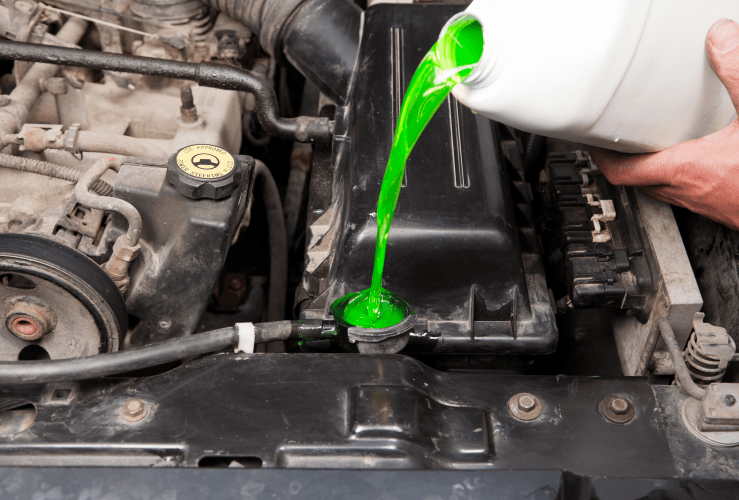
- Low coolant level The heater needs a steady flow of hot coolant. A leak or air pocket starves the heater core.
- Stuck-open thermostat The engine runs cool. You get lukewarm or cold air at idle and while driving.
- Clogged heater core Rust or debris blocks flow. One heater hose feels hot, the other is warm or cold.
- Malfunctioning blend door actuator The system cannot route air across the heater core. You get cold air no matter the setting.
- Blower motor or resistor failure The fan moves no air or only at one speed. Heat output drops a lot.
- Failing water pump Poor circulation means weak heat at idle. Heat may improve with higher RPM.
- Air trapped in the cooling system An improper refill can leave air pockets. Heat comes and goes, often with gurgling sounds.
- Dirty cabin air filter Air cannot flow through the core. Output feels weak even if the core is hot.
- Control head or sensor faults Climate control misreads temperature. It commands the wrong blend door position.
- Head gasket leak Exhaust gases enter coolant. You may smell exhaust in the coolant and see bubbles in the reservoir.
When drivers ask why my heat doesn’t work in my car, I start with coolant and the thermostat. They cause the bulk of failures and are quick to check.
Quick diagnostic checklist
Use this simple list to speed up your diagnosis. You can do most steps in your driveway.
- Check the coolant level Only when the engine is cold. Top up with the correct coolant if it is low.
- Inspect for leaks Look for wet spots, white residue, or a sweet smell near hoses, radiator, and heater core area.
- Watch the temperature gauge It should reach normal range in 5–15 minutes of driving in cool weather.
- Feel the heater hoses With gloves, feel both heater hoses after warm-up. Both should be hot. One cold hose suggests a clog.
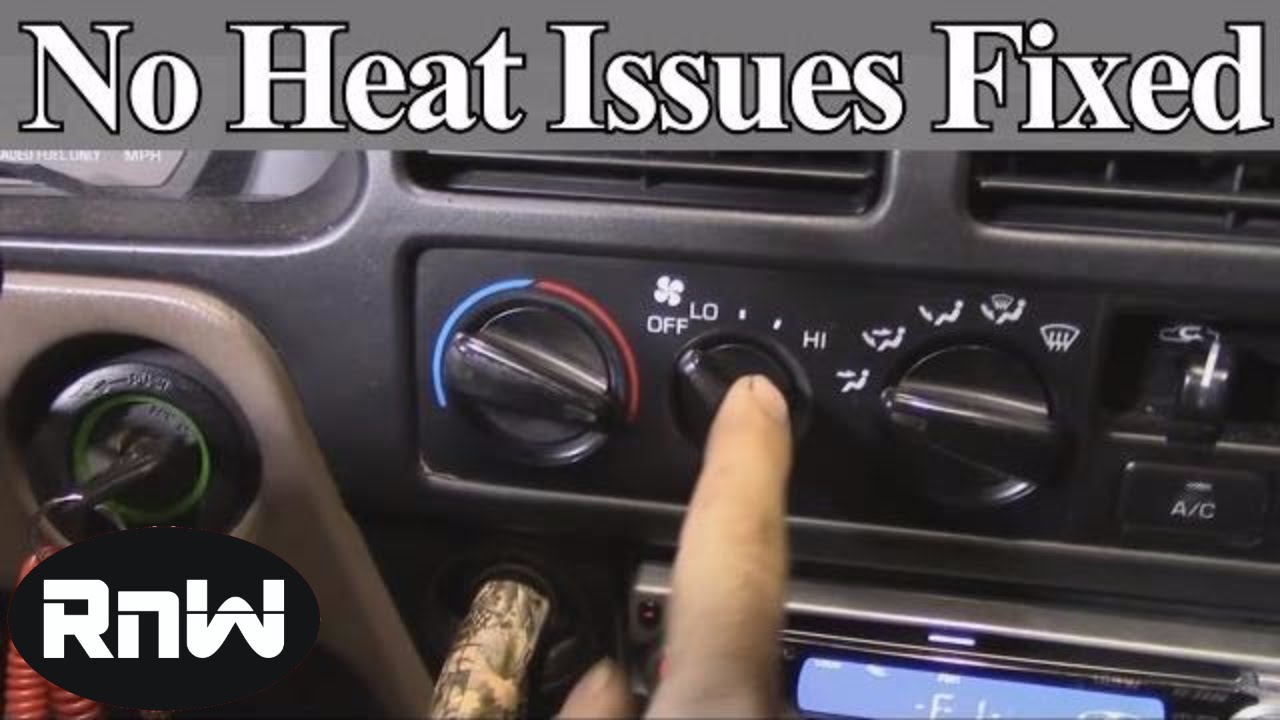
- Test the fan speeds Make sure the blower works on all speeds. If only one speed works, suspect the resistor.
- Change temperature settings Listen for door movement A clicking or no change hints at a bad blend door actuator.
- Try different vents Switch between defrost, panel, and floor. If only one mode works, suspect a mode door issue.
- Check the cabin filter If dirty, replace it. It is a cheap, fast improvement.
- Sit at idle, then raise RPM If heat improves with RPM, suspect low coolant, air in the system, or a weak water pump.
- Smell and observe Look for fogged windows, sweet odor, or damp carpets. These point to a heater core leak.
If you need to answer why my heat doesn’t work in my car in minutes, this checklist is the fastest path.

DIY fixes and when to see a mechanic
Many issues have easy, safe fixes. Others need tools and care. Start small and avoid risky steps.
DIY you can try today:
- Top up coolant Use the correct type. Do not open a hot cap. If it drops again, you have a leak.
- Replace the cabin air filter It can take five minutes and restores airflow.
- Reset the HVAC controls Some cars relearn door positions if you pull the HVAC fuse for a minute, then restart.
- Thermostat replacement On some cars, it is simple. On others, it needs more time and bleeding.
Jobs best left to a pro:
- Heater core replacement It often needs dash removal and several hours.
- Cooling system bleed on complex systems Some cars need vacuum fill tools to remove air.
- Electrical diagnosis for blend door actuators This needs a scan tool and access to ducting.
- Head gasket testing This needs pressure tests or chemical tests.
From my experience, the biggest money saver is to confirm coolant level and thermostat performance first. Those two fix a large share of why my heat doesn’t work in my car cases.
Preventive maintenance tips
Good care keeps the heater strong for years. Small habits matter in winter.
- Follow coolant change intervals Old coolant can corrode the heater core and clog it.
- Inspect hoses and clamps once a season Soft or wet spots hint at leaks.
- Run the heater weekly, even in summer It keeps doors and actuators moving.
- Replace the cabin filter every 12 months or sooner in dusty areas This preserves airflow and reduces odors.
- Watch for small changes Warm-up time, gauge behavior, or odd smells are early warning signs.
Use these habits and you will avoid most why my heat doesn’t work in my car problems before they start.
Repair costs and time estimates
Prices vary by car and region. Here are typical ranges I see at shops.
- Thermostat and coolant bleed Parts and labor: 150–400 USD. Time: 1–2 hours.
- Blend door actuator Parts and labor: 200–600 USD. Time: 1–3 hours.
- Heater core flush Service: 100–200 USD. Time: 1 hour. May fix mild clogs.
- Heater core replacement Parts and labor: 700–1,800 USD. Time: 4–10 hours.
- Blower motor or resistor Parts and labor: 150–450 USD. Time: 1–2 hours.
- Head gasket repair Parts and labor: 1,500–3,500 USD+. Time: 1–3 days.
Knowing these ranges helps you plan a budget and decide what to tackle first. It also frames the value of early checks when you face why my heat doesn’t work in my car.

Special notes for different vehicle types
Not all systems behave the same. A few points can save you time.
- Older trucks without cabin filters Dirt collects on the heater core face and blocks airflow. A shop can clean the case.
- Cars with dual-zone climate One side may blow hot, the other cold. That is a blend door or actuator issue.
- Turbo or performance engines Thermostat and coolant bleeding are more sensitive. Follow factory steps.
- Hybrids and EVs Heat sources differ They use PTC heaters or heat pumps. Diagnostic logic is not the same.
Whatever you drive, start with the basics if you are stuck on why my heat doesn’t work in my car. Then follow the model-specific service steps.
Safety warnings you should not ignore
Working on the cooling system can hurt you if you rush. Use care.
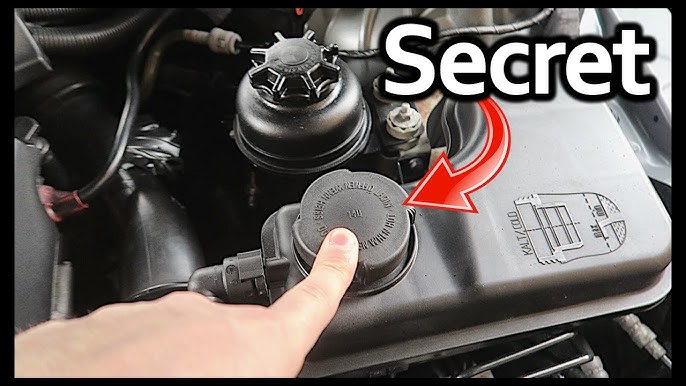
- Never open the radiator or reservoir when hot Hot coolant can spray and cause burns.
- Use the correct coolant Mixing types can cause gelling or corrosion.
- Support the car if you need to go under it Use jack stands on solid ground.
- Handle coolant with care It is toxic to people and pets. Clean spills at once.
A few safe habits prevent big problems while you diagnose why my heat doesn’t work in my car.
Frequently Asked Questions of why my heat doesn’t work in my car
Why does my car blow cold air at idle but warm up when driving?
Coolant may be low or the water pump is weak. As RPM rises, flow improves and heat returns.
Can a bad thermostat cause no heat?
Yes. A thermostat stuck open keeps the engine cool and lowers heater output. Replacing it often restores heat fast.
Why does only one side of my car blow hot air?
Dual-zone systems use separate blend doors. A failed actuator or door on one side can cause uneven heat.
Could the cabin air filter stop my heat?
It will not make cold air, but it can choke airflow. Replace it to restore volume and comfort.
How do I know if my heater core is clogged?
One heater hose is hot and the other is cooler. You may also hear gurgling or get weak heat even with a hot engine.
Does low coolant always mean a leak?
Usually, yes. Look for drips, crusty residue, or damp carpets. A pressure test can confirm the source.
Why does my heat work only while driving on the highway?
At speed, airflow and coolant flow rise. That masks problems like low coolant, a weak pump, or air pockets.
Can the blend door actuator fail without a code?
Yes. You may hear clicking or see no change in temperature. Manual tests can still find the fault.
Will a coolant flush fix no heat?
A flush can clear mild clogs in the heater core. If the core is badly blocked, it may need replacement.
What should I check first if I wonder why my heat doesn’t work in my car?
Check coolant level cold, watch the temperature gauge, and test fan speeds. These quick steps solve many cases.
Conclusion
A warm cabin depends on hot coolant, good airflow, and working doors and controls. Start with simple checks like coolant level, thermostat behavior, and blower function
These steps solve most cases of why my heat doesn’t work in my car without guesswork. Take action today. Use the checklist, fix what you can, and call a pro when needed. Want more guides like this? Subscribe, share your results, or ask a question below.