

Most cars stop blowing cold air due to low refrigerant, leaks, or airflow issues.
You came here asking why isn’t my car blowing cold air, and you want clear, trusted help. I’ve diagnosed hundreds of AC systems, from simple leaks to tricky control faults.
In this guide, I’ll show you exactly how your AC works, what fails most, how to test it at home, and when to see a pro. Stay with me, and you’ll know what to do next without guesswork.

How Your Car’s AC Works in Plain Terms?
Your AC moves heat from the cabin to the outside. The compressor pressurizes refrigerant, which then cools in the condenser. It expands at a valve and gets cold in the evaporator. The blower sends air across it and into the cabin.
Sensors and modules control the system. The clutch or control valve tells the compressor when to work. Fans pull air across the condenser. Blend doors set the air mix. Any weak link stops cold air.
Many drivers ask, why isn’t my car blowing cold air when the fan still works? Often the system runs, but the refrigerant path or airflow is not right. A small leak or a stuck door can ruin cooling.

Common Reasons Your AC Is Not Blowing Cold Air
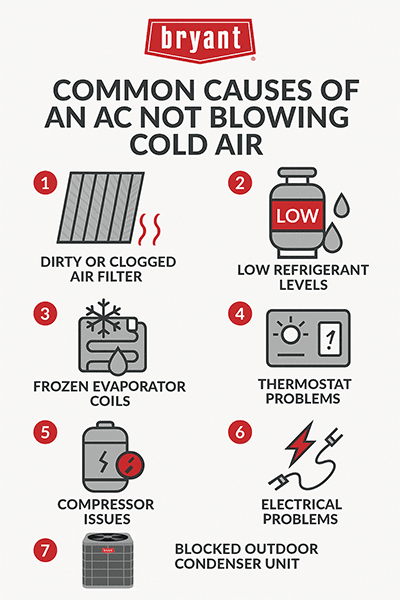
Small issues cause most AC failures. Start with the simple things, then move deeper. Ask yourself, why isn’t my car blowing cold air even though the light is on?
Low refrigerant from a leak
- Most common cause.
- Signs: short cold burst, then warm. Bubbles in the sight glass if equipped.
- Look for oily spots at hoses, condenser, compressor shaft seal, or service ports.
Overcharge or wrong refrigerant
- Too much refrigerant raises pressure and heat.
- R‑134a and R‑1234yf are not the same. Mixing hurts parts.
- Cans with sealers can clog parts and tools.
Weak or failed compressor
- Clutch slips or will not engage.
- Variable compressors can lose stroke due to a bad control valve.
- Metal debris can spread after a major failure.
Condenser airflow problems
- Debris, bent fins, or plastic bags block flow.
- Cooling fans may be weak or dead.
- High pressures on a gauge often point here.
Blocked expansion valve or orifice tube
- Ice, debris, or sealers can clog the metering device.
- One line frosty, the other hot.
- Evaporator may freeze and then thaw in cycles.
Blower motor or resistor faults
- Weak airflow feels like warm air.
- Some speeds work, others do not.
- The evaporator can be cold, but you cannot feel it.
Blend door or actuator failure
- Stuck in warm or mixed air.
- Clicking under the dash on key on.
- Temp changes on one side only in dual-zone cars.
Clogged cabin air filter
- Low airflow, musty smell.
- Easy and cheap fix.
- Replace at least once a year.
Electrical issues
- Blown fuse, bad relay, poor ground.
- Faulty pressure sensor or ambient sensor.
- Control head or module fault in rare cases.
Engine or cooling system issues
- Overheating reduces AC output.
- Low coolant or bad thermostat can cut AC.
- Fans not running raise system pressure.
Moisture or air in the system
- Poor service can let air and water in.
- Moisture freezes and blocks flow.
- A spent dryer cannot protect the system.
When you think, why isn’t my car blowing cold air, odds are a leak or airflow fault is to blame. A few simple checks can point you in the right direction.
How to Diagnose at Home: A Step-by-Step Checklist
Before you spend money, try these safe checks. This simple plan answers the core question: why isn’t my car blowing cold air?
- Check the AC light and listen for a click. If you hear a click and idle dips, the compressor likely engages.
- Set AC to max cold and recirculate. This reduces heat load and gives the best test.
- Check airflow at the vents. Weak flow suggests a clogged cabin filter or blower issue.
- Inspect the cabin filter. Replace if dirty or damp.
- Look at the condenser. Remove leaves and bugs with low-pressure water from inside out.
- Verify radiator and condenser fans work with AC on. If not, check fuses and relays.
- Use an inexpensive thermometer at a center vent. Note ambient and vent temps. A healthy system cools about 20–30°F below ambient.
- Note short cold bursts. That hints at low refrigerant, icing, or a control fault.
- Scan for codes if you can. Many cars log AC and blend door codes.
- Avoid DIY refrigerant cans with sealers. They can damage parts and make future service hard.
If you still ask, why isn’t my car blowing cold air after these steps, you may need gauges, a vacuum pump, and leak test tools. Those require training and care by law.
When to See a Professional and Typical Repair Costs
Refrigerant service is regulated. Venting is illegal. Shops use SAE-rated machines and follow EPA rules. A certified tech can test, recover, evacuate, and charge to spec.
Typical cost ranges vary by model and refrigerant type:
- AC performance check and diagnosis: 80 to 180 dollars.
- Recover, evacuate, and recharge with R‑134a: 120 to 220 dollars.
- Recharge with R‑1234yf: 200 to 450 dollars due to higher material cost.
- Leak test with dye or electronic detector: 60 to 150 dollars.
- Replace a leaking hose or O‑ring set: 120 to 350 dollars.
- Condenser replacement: 300 to 900 dollars.
- Compressor replacement and flush: 900 to 2,200 dollars.
- Blend door actuator: 150 to 450 dollars, more if the dash must come out.
If you are still thinking, why isn’t my car blowing cold air after a recharge, there is likely a leak or a control fault. Ask for a leak proof test and a pressure and temperature report.

Preventive Maintenance to Keep Your AC Cold
Small habits can stop big repairs. They also reduce the chance you ever ask, why isn’t my car blowing cold air.
- Run the AC for 10 minutes weekly, even in winter. This keeps seals oiled.
- Replace the cabin air filter every 12 months or 12,000 miles.
- Wash the condenser gently each spring.
- Use recirculate in heavy heat or traffic. It reduces system load.
- Park in shade or use a sunshade. Lower cabin temps help the AC.
- Service by spec. Do not top off blind. Charge by weight only.
- Avoid sealers. They can clog valves and dryers.
These steps keep pressures in range and parts clean. They also extend compressor life.
Real Stories From the Shop: What I See Most Often
I see the same patterns each summer. They can explain why isn’t my car blowing cold air in your case too.
A compact SUV came in warm at idle but fine on the highway. The fan was weak. A new fan module fixed it the same day.
A sedan had a cold driver vent and warm passenger vent. The right blend door actuator had failed. A simple part solved a confusing symptom.
A small crossover had a slow leak at a service port core. We replaced both cores, evacuated, and charged to spec. It stayed cold for years.
One truck was overcharged by a DIY can. Pressures were high and cooling was poor. We recovered, vacuumed, and charged by weight. Vent temps dropped by 25°F.

Frequently Asked Questions of why isn’t my car blowing cold air
Why isn’t my car blowing cold air even after a recent recharge?
A recharge can mask a leak for a short time. You likely need a leak test and a correct charge by weight.
Why does my AC blow cold while driving but warm at idle?
Airflow is low at idle. Check condenser fans, debris on the condenser, and engine cooling.
Why does the AC start cold, then turns warm after a few minutes?
Low refrigerant or icing is common. A clogged expansion valve or weak compressor can also cause cycling.
Why isn’t my car blowing cold air on one side only?
That points to a blend door actuator or a door jam. Dual-zone systems often fail on one side first.
Why did my AC stop after a battery change or service?
The system may need a recalibration of the HVAC doors. Some cars store control codes that need a reset.
Why isn’t my car blowing cold air when the fan is strong?
The evaporator may not be cold. Check refrigerant charge, compressor function, and the expansion device.
Why does the AC smell and cool poorly?
A dirty cabin filter or a moldy evaporator is likely. Clean the case and replace the filter.
Conclusion
Most AC problems come down to leaks, airflow, or control faults. Now you can spot the signs, test simple things, and choose smart next steps. If you still wonder why isn’t my car blowing cold air, book a pro test and ask for results in writing.
Take action today. Clean the condenser, swap the cabin filter, and check the fans. If needed, schedule a proper evac and recharge. Want more guides like this? Subscribe, share your results, or leave a question for tailored advice.