

The best brake pads for Nissan Altima are quality ceramic sets with low dust.
You hit the brakes and hear a squeal. Or you see dark dust on your wheels. Maybe your pedal feels soft when you need it firm. I’ve been there with the Altima, and I know how much the right pads matter.
The best brake pads for nissan altima stop smooth, stay quiet, and keep your wheels cleaner. They also fit right the first time and wear evenly, so you don’t have to think about them again for years. Below, I break down top options that deliver real-world results for daily driving, commuting, and light spirited use.
5 Best Brake Pads for Nissan Altima
Bendix Premium SBC1650 Ceramic Front Pads

Bendix Premium SBC1650 is the kind of front ceramic pad I reach for when I want quiet, clean wheels, and a confident bite. The fit on Altima calipers is excellent, and the friction material feels consistent in stop-and-go traffic and highway cruising.
These are engineered to meet current copper-free standards and use multi-layer shims to reduce noise. If your goal is to replace and forget, this set checks the right boxes.
On the road, I notice smooth initial engagement and linear response as I add pedal pressure. They run cool in normal driving and keep dust to a light gray that wipes off easily. Bedding takes only a few moderate stops to settle in. For most owners seeking the best brake pads for nissan altima for daily use, this is a very smart front-axle pick.
Pros:
- Quiet ceramic friction with stable, predictable bite
- Low dust that keeps wheels cleaner
- Quality shims help kill squeal and chatter
- Copper-free formulation aligned with current standards
- Excellent OE-style fit for 2013–2024 Altima
Cons:
- Front pads only; no rear set included
- Not designed for track or heavy performance use
- May cost more than entry-level off-brand sets
My Recommendation
If you want quiet, dust-light stopping for your daily commute, pick this Bendix Premium set. It’s ideal for city and highway drivers who value cleanliness, OE-like feel, and long pad life. The best brake pads for nissan altima should deliver confidence without noise or mess, and these do exactly that. Stock availability is strong, and performance per dollar is excellent for front replacements.
| Best for | Why |
|---|---|
| Daily commuting | Quiet, smooth, and low dust ceramic compound |
| OE-like pedal feel | Linear, predictable bite across temperatures |
| Clean wheels | Dust wipes off easily and stays light |
Evkingauto 8pc Ceramic Pads Set (2013-2023)
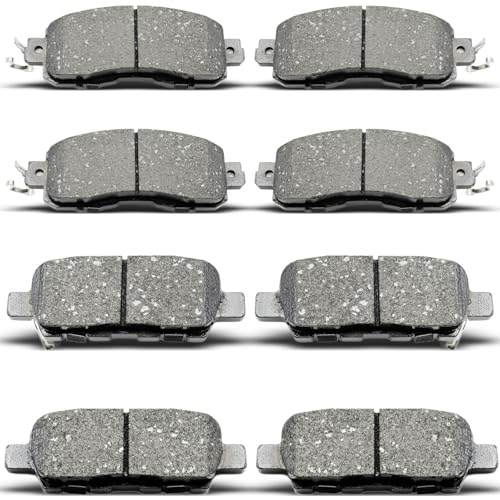
This 8-piece Evkingauto bundle covers both front and rear axles for 2013–2023 Altima, matching D1650 fronts and D905 rears. It’s a budget-friendly way to refresh all four corners at once.
The ceramic compound aims for quiet stops and reduced dust, which is what most Altima owners want. If your rotors are in good shape and you need a full pad swap, the value here is strong.
On the road, I look for even bite between the front and rear sets, and this kit feels balanced after proper bedding. Noise control is good once shims are seated and hardware is cleaned and lubricated.
For rideshare drivers or long commuters, the set-and-forget approach saves time. It’s a straightforward option if you want the best brake pads for nissan altima on both axles without overspending.
Pros:
- Full front and rear pad set for one-stop service
- Quiet ceramic compound aimed at daily driving
- Good price-per-axle value
- Balanced response after bedding
- Works well for rideshare and high-mile drivers
Cons:
- Brand recognition is lower than legacy names
- Longevity may vary with driving habits
- Hardware not always included; reuse OEM clips if needed
My Recommendation
Choose this kit when you want both axles done at once and need a clean, quiet ride on a budget. It suits commuters who want low dust and consistent pedal feel across town and highways. The best brake pads for nissan altima should fit right, settle in fast, and stay calm under normal heat. This set delivers that without breaking the bank.
| Best for | Why |
|---|---|
| Full-axle refresh | Includes front and rear pads in one purchase |
| Budget-conscious owners | Solid value with ceramic performance |
| Daily commuting | Quiet operation after bedding-in |
Bendix Priority1 CFC1650 Ceramic Front Pads

Bendix Priority1 is a service-grade ceramic front pad that focuses on reliable stops at a strong price. Fitment is solid on Altima front calipers across common 2013–2024 models. The ceramic formulation aims at low noise and moderate dust, ideal for daily drivers.
If you’re swapping fronts and want a reputable name without the premium price, this is a smart lane. Underfoot, initial bite is steady and controllable, with a calm pedal during daily traffic.
Dust remains manageable, and noise stays in check after proper bedding and clip lubrication. These are engineered to meet current copper limits, which is important for 2026 and beyond. For many, the best brake pads for nissan altima are those that perform quietly and keep costs predictable Priority1 hits that mark.
Pros:
- Trusted brand at a budget-friendlier tier
- Quiet ceramic stopping for city and highway
- Consistent fit and finish for D1650 shape
- Compliant with modern copper-free standards
- Easy to bed in with smooth, linear bite
Cons:
- Front-axle only; rear pads sold separately
- Not tuned for aggressive or track driving
- May dust more than higher-end Bendix series
My Recommendation
Pick Priority1 if you want reliable front stopping at a value price from a name you trust. It’s well-suited for commuters who want quiet pads and straightforward installation. The best brake pads for nissan altima should be easy to live with—these deliver on that promise while keeping budgets in check. Stock is typically good, so availability should not be an issue.
| Best for | Why |
|---|---|
| Value-focused drivers | Service-grade ceramic with Bendix engineering |
| Quiet street use | Low noise with proper bedding and lube |
| OE-style fit | Accurate D1650 fitment across many model years |
SCITOO Front/Rear Pad Kit (2013-2017)

This SCITOO kit pairs semi-metallic front pads with ceramic rears for 2013–2017 Altima. The mixed setup gives the front axle extra bite and heat tolerance, while the rear stays quieter and cleaner.
If you prefer a firmer pedal and a little more front-end authority, this combo can be a smart play. It’s a balanced approach for drivers who carry passengers or gear and want extra peace of mind.
In daily use, I feel a sharper initial bite up front, which boosts confidence at higher speeds. The rears remain calm and help keep overall dust down.
Expect a little more front dust and some potential for noise compared to all-ceramic sets. But for some drivers, the added front grip makes this among the best brake pads for nissan altima, especially in mixed conditions.
Pros:
- Front semi-metallic pads add bite and heat resistance
- Rear ceramic pads keep noise and dust low
- Good all-around control with a firmer pedal
- Full-axle kit simplifies purchasing
- Solid pick for heavier loads or hilly routes
Cons:
- More front dust than all-ceramic sets
- Potential for some noise if not bedded properly
- Fit limited to 2013–2017 Altima years
My Recommendation
Choose SCITOO if you want stronger front bite with a calmer rear, and your Altima falls in the 2013–2017 range. It’s ideal for drivers who value a firm, confident pedal and carry passengers or gear often.
The best brake pads for nissan altima depend on your feel preference this set leans toward control and authority up front. Availability varies, so check stock if you need it soon.
| Best for | Why |
|---|---|
| Stronger front bite | Semi-metallic fronts resist fade and grab quicker |
| Lower rear noise | Ceramic rears keep the cabin quiet |
| Hilly or loaded driving | Added control under higher heat |
PowerStop Front Ceramic Pads 17-1650 + Hardware

PowerStop’s 17-1650 front ceramic pads come with installation hardware, which saves time and helps prevent noise. The stainless abutment clips are a big plus if your originals have worn grooves or corrosion.
The ceramic compound is tuned for quiet stops and light dust, with a reassuring, OE-like pedal feel. For many Altima owners, this kit hits the sweet spot between price, performance, and convenience.
On the road, I feel steady initial bite and smooth modulation as speed drops. Noise control is excellent when you clean the bracket channels and lubricate the slide pins.
These pads meet modern low-copper requirements and hold up well in daily use. If you want one of the best brake pads for nissan altima that includes the small parts that make a big difference, this PowerStop set is hard to beat.
Pros:
- Includes stainless hardware to reduce noise and drag
- Quiet ceramic friction with low dust
- Strong, predictable bite and pedal feel
- Reputable brand with consistent quality control
- Great value for a front-axle refresh
Cons:
- Front-only kit; rear pads not included
- Price can vary with demand
- Proper cleaning and lube still required for best results
My Recommendation
Pick PowerStop if you want a quiet ceramic front set with the clips included. It’s best for owners who want a smoother install and fewer chances for future noise. The best brake pads for nissan altima should fit right, stop quiet, and arrive with the small parts that matter this kit checks those boxes. Availability is usually stable, and support materials are solid.
| Best for | Why |
|---|---|
| Easy installation | Includes stainless clips that fight wear and noise |
| Quiet, clean braking | Ceramic compound keeps dust and squeal low |
| OE-like performance | Predictable pedal with smooth modulation |
How I picked the best brake pads for your Altima?
- Real-world performance: I focus on quiet stops, smooth bite, and even wear. The best brake pads for nissan altima should feel natural and keep your wheels clean.
- Fitment accuracy: D1650 front and D905 rear (for many 2013–2024 models) must seat correctly in the bracket with the right backing plate thickness.
- Noise control: Multi-layer shims, proper chamfers, and hardware fit matter. Pads that bed fast and stay quiet get the nod.
- Dust level: Ceramic compounds generally make less dust. This keeps wheels cleaner and reduces the chance of rotor scoring from gritty deposits.
- Compliance: Modern copper-free formulations (N-compliant) protect the environment without hurting performance.
- Value and support: Trusted brands and kits with hardware earn extra points for ease of install and long-term reliability.
Choosing the right friction type for your driving
- Ceramic: Best for quiet, clean, daily driving. This is why I often rank ceramic as the best brake pads for nissan altima for most owners. They produce less visible dust and keep NVH (noise, vibration, harshness) low.
- Semi-metallic: Higher friction and better heat control. Good for heavy loads, hilly routes, or spirited driving. Can be a bit noisier and dustier.
- Low-metal NAO: A middle ground. Decent bite with moderate dust and noise. Less common now due to modern ceramic tech.
Signs it’s time to replace pads and why it matters
- Squeal or squeak: Could be wear indicators or glazed pads. The best brake pads for nissan altima should include quality shims and bed in well to fight squeal.
- Longer stopping distance: The pedal feels soft or requires more pressure. This can be pad fade, contamination, or worn rotors.
- Vibration under braking: Often a rotor thickness variation or deposits. Pads alone might not fix it; check rotors.
- Dust spikes or deep grooves: Excess dust and rotor scoring suggest it’s time for fresh pads and possibly rotors.
Rotor check and when to replace
- Measure rotor thickness: Compare to the minimum spec etched on the hat edge. If below spec, replace the rotor.
- Look for heat spots or cracks: Replace if you see deep blue spots, cracks, or heavy grooves.
- Clean and prep: If rotors are serviceable, clean with brake cleaner and scuff with a non-metallic pad to remove glaze before new pads.
- Bed-in after install: Proper bedding lays down an even transfer layer and prevents judder.
Installation tips that prevent noise
- Hardware matters: Clean bracket channels with a small file or wire brush. Corrosion under the clips causes binding and uneven wear. This is why I like the PowerStop kit with new clips.
- Lubricate the right spots: Use a high-temp synthetic brake lubricant on slide pins and abutment clip contact points. Do not get lube on pad friction material.
- Check caliper pins: Make sure they move freely. Stuck pins cause tapered pad wear and noise.
- Torque and sequence: Torque caliper bracket and wheel lugs to spec. Uneven torque can cause rotor distortion and vibration.
- Bed-in procedure: 5–8 moderate stops from 35–40 mph down to 5–10 mph with light cooldown between each. Avoid full stops or holding the pedal at a stop for the first few miles to prevent imprinting.
How long do Altima brake pads last?
- Typical range: 30,000 to 70,000 miles for ceramic pads in normal driving. Rideshare or city-only use trends toward the lower end. Highway commuters often see the high end.
- Driving style: Hard braking shortens life. Smooth, early braking extends it.
- Rotor condition: Good rotors help pads last longer and stop smoother. Warped or grooved rotors eat pads fast.
- Climate: Hilly or hot climates heat pads more, which can reduce life.
Why bedding is non-negotiable
- Pads and rotors exchange a microscopic film called a transfer layer. Good bedding lets that film spread evenly.
- Even film equals smooth, quiet stops. Poor bedding creates hot spots and shakes.
- Every new pad set, even the best brake pads for nissan altima, needs a proper bed-in. It’s the fastest way to get quiet, strong stops.
What about 2019–2025 Altima compatibility?
- Many 2013–2025 Altima models share the D1650 front pad shape. The products above specify coverage by year. Always confirm with your VIN because trims, engines, or sub-models can vary.
- Nissan LEAF cross-compatibility: You’ll see some overlap in listings (like Bendix and PowerStop) covering certain LEAF years that share pad shapes. Fitment still needs a VIN check before ordering.
Dust, noise, and wheel care
- Ceramic dust is typically lighter and easier to wipe off. Use a pH-neutral wheel cleaner and a soft brush.
- A slight chirp after a rainy night is normal. Moisture can flash rust the rotor surface; it clears after a few stops.
- If new pads squeal, recheck the hardware, confirm proper lubing, and ensure you bedded them. Even the best brake pads for nissan altima will make noise if the bracket has rust ridges under the clips.
Safety and environmental notes
- Modern pads phase out copper to protect waterways and aquatic life. Look for N-compliant pads that meet 2025 standards.
- Used pad dust is a respirable particulate. Wear a mask, use a catch pan, and clean with wet methods instead of compressed air.
Comparing the options above at a glance
- Bendix Premium SBC1650: Best overall front ceramic for quiet, clean daily driving with excellent fit.
- Evkingauto 8pc: Best budget full-axle refresh for 2013–2023 with balanced ceramic feel.
- Bendix Priority1 CFC1650: Best value front ceramic from a trusted brand for everyday commuters.
- SCITOO Kit: Best for 2013–2017 drivers wanting firmer front bite and calm rears.
- PowerStop 17-1650: Best front kit with hardware for a quiet install and clean results.
What I’d pair for a full refresh
- Front: Bendix Premium or PowerStop 17-1650 (hardware included helps).
- Rear: A ceramic rear set matched by brand if possible for consistent feel. If you chose Evkingauto’s full kit, you’re covered on both axles.
- Rotors: If rotors are near minimum or show grooves, replace them in pairs. This gives a fresh, even surface for the new pads to bed in quickly and quietly.
Driving styles and pad choices
- Easy commuter: Ceramic front and rear for the quietest, cleanest ride. You’ll see why ceramic sets often rank as the best brake pads for nissan altima for most drivers.
- Hilly or heavier loads: Semi-metallic fronts with ceramic rears can add confidence. SCITOO’s mix is purpose-built for that feel.
- Rideshare or delivery: Full-axle ceramic kits that are gentle on wheels and easy on ears, like Evkingauto’s set, keep the cabin calm and maintenance simple.
Troubleshooting squeal and shake
- Squeal: Check shims for seating, ensure clips are clean, and lube contact points. Verify you bedded the pads correctly. A few extra moderate stops can help.
- Shake or steering wheel vibration: Often rotor thickness variation. Resurface or replace rotors. Check lug torque and hub rust.
- Pulling left or right: Inspect caliper slide pins and hoses. Sticking calipers can cause uneven braking.
Why I favor ceramic for most Altimas?
- The Altima’s chassis and NVH tuning reward a calm, consistent brake feel. Ceramic pads deliver that with less dust and fewer hot spots.
- The best brake pads for nissan altima should fit OE hardware, settle in fast, and keep noise down. Modern ceramic technology excels at this and holds up well over long commutes.
Maintenance tips for longer pad life
- Brake fluid: Flush every 2–3 years. Fresh fluid reduces fade and protects calipers.
- Tire rotations: Keep them on schedule. Even tire wear helps maintain balanced braking and ABS performance.
- Clean annually: Remove pads, clean clips and bracket channels, and relube pins. Small maintenance steps keep even the best brake pads for nissan altima performing like new.
Honing your pedal feel
- If your pedal feels long, bleed the brakes and check rear pad movement. Air or swollen hoses cause soft pedals.
- For a firmer bite, consider a semi-metallic front pad. If you want low dust and quiet, stay ceramic.
Real-world outcomes you can expect
- With any of the ceramic sets above, expect a near-OE pedal, low dust, and quiet stops after proper bedding. Wheels will stay much cleaner week to week.
- With the SCITOO mixed kit, expect stronger initial grab up front and a bit more dust, but with better high-heat comfort.
- With the PowerStop kit, the included hardware helps stop squeaks before they start, which is one reason it’s often counted among the best brake pads for nissan altima.
FAQs Of best brake pads for nissan altima
Which pad type is best for daily driving?
Ceramic pads. They run quiet, make less dust, and feel smooth. That’s why ceramic often tops lists of the best brake pads for nissan altima.
Do I need to replace rotors with pads?
Not always. Measure rotor thickness and inspect for grooves or heat spots. Replace rotors in pairs if below spec or heavily worn.
How long do Altima pads usually last?
About 30,000 to 70,000 miles. City driving shortens life; highway driving extends it. Quality ceramic sets last longer and stay quieter.
How do I stop brake squeal?
Clean and lubricate hardware, ensure shims are seated, and bed the pads. If rotors are glazed or uneven, resurface or replace them.
Will 2013 pads fit a 2019 Altima?
Many do share the D1650 front shape, but always confirm by VIN. Trim or brake package differences can change fitment.
Final Verdict: Which Should You Buy?
For most daily drivers, PowerStop 17-1650 or Bendix Premium SBC1650 are the best brake pads for nissan altima. They run quiet, dust less, and feel like OEM. If you want full-axle value, the Evkingauto 8-piece kit is hard to beat.
Prefer stronger bite up front? The SCITOO mix gives you that. Need a trusted budget front option? Bendix Priority1 fits the bill. Pick based on your driving style, and you’ll get smooth, clean, confident stops.